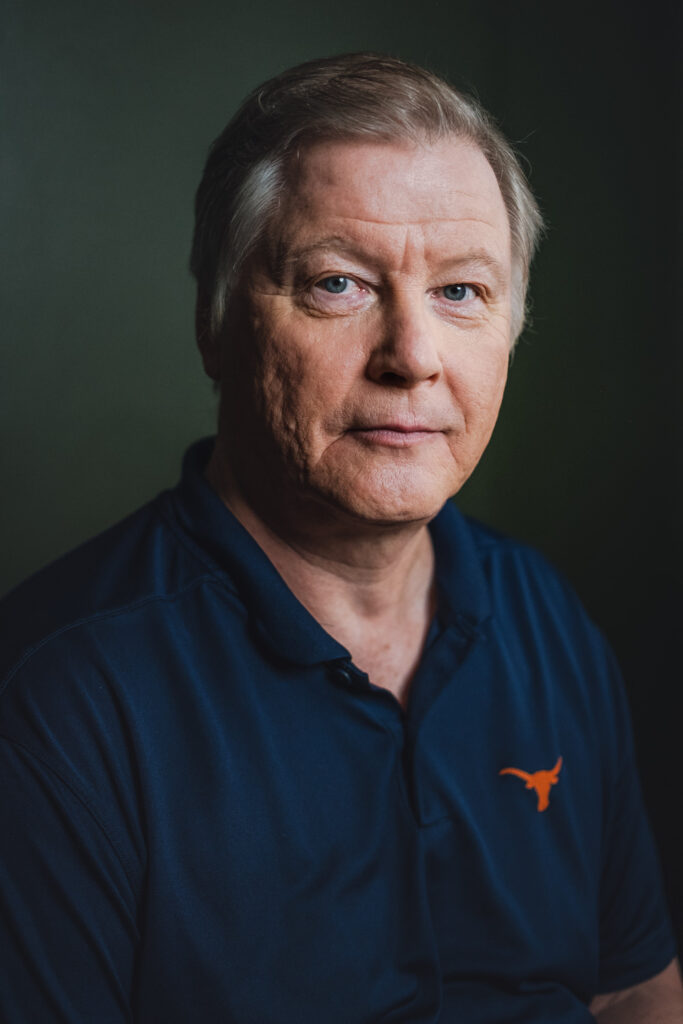
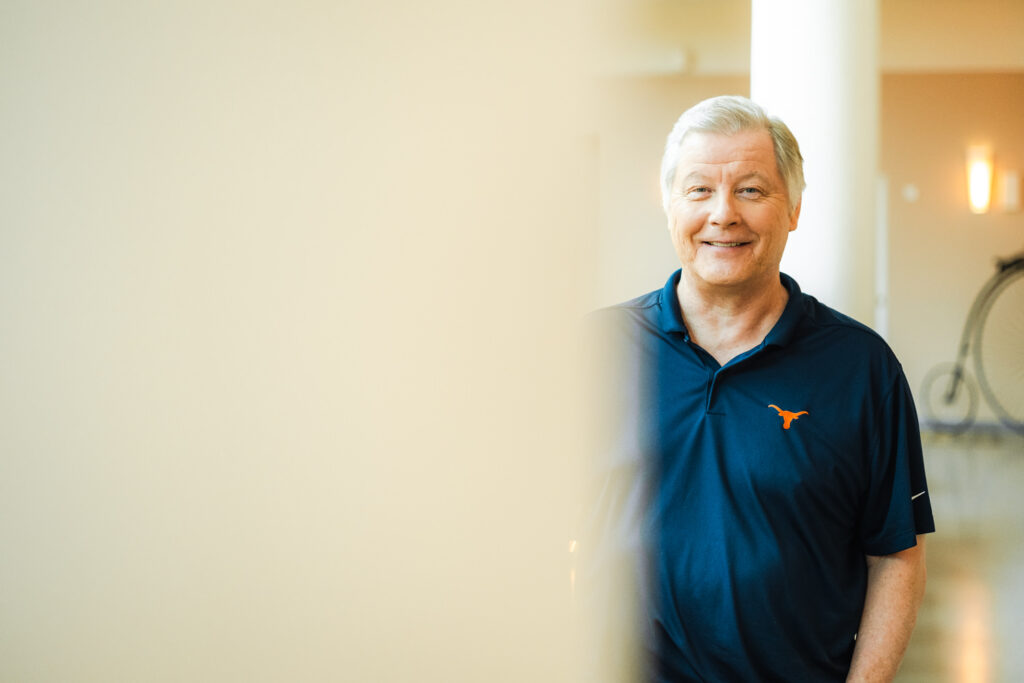
Risto Miikkulainen is a Professor of Computer Science at the University of Texas at Austin, co-founder of CognizAnt AI Lab, and one of Finland’s most internationally recognized AI researchers. For decades, he has explored language, cognition, and artificial intelligence, beginning his work long before AI entered the mainstream. As AI now advances at an unprecedented pace, Miikkulainen believes the future will be built on collaboration between humans and intelligent machines.
A calling that led across the atlantic
“There’s all sorts of clutter that comes with the job.”
That is how Risto Miikkulainen describes his everyday work life in Texas, where he serves as a professor and continues his research in artificial intelligence. During his doctoral studies in the 1980s, things were different. Back then, he could focus almost entirely on research. Today, administrative responsibilities take up a significant part of his working week.
“I came to Finland to write a book. In this role, you have to make sure there is time left for creative work.”
Although leadership and responsibility take time away from the aspects of research he enjoys most, Miikkulainen values collaboration. Working with others expands his own thinking and increases the impact of the work.
“It is almost like thinking through other people.”
It quickly becomes clear that Miikkulainen has found his life’s calling. His journey began at the Helsinki University of Technology, known to many Finns simply as “Polytechnic”, today part of Aalto University, where he studied mathematics and conducted research. At an early stage, however, he became fascinated by artificial intelligence, a field that was already being explored in the United States during the 1980s.
“If someone claims they knew AI would eventually be everywhere, they are not telling the truth. The fact that it turned out this way was a huge surprise.”
Can AI learn to understand itself?
“I believe AI can end poverty.”
Risto Miikkulainen believes artificial intelligence will increasingly contribute to demanding expert tasks, from medical research to legal analysis.
“We decide what kind of society we want to build, and AI can help us build it.”
According to Miikkulainen, one advantage of AI is that its work is not driven by personal motives in the same way human decision-making often is.
Throughout his career, Miikkulainen has focused on questions related to cognition, language, and intelligence. The same fundamental mysteries have followed him for decades: How does language emerge? Why do humans need it? What can language reveal about intelligence itself?
He knows there will never be a final answer. Every discovery generates new questions.
Today, Miikkulainen is particularly interested in the development of large language models. The most fascinating questions revolve around whether current AI systems truly understand the structure of language and whether they may eventually use language in ways that resemble human cognition.
“The possibility that AI could develop a better understanding of its own processes and even engage in metacognitive reasoning is extremely interesting.”
Giant models or networks of AI?
Language models are evolving rapidly and in many different directions. While new research ideas once took years to spread and develop, breakthroughs now emerge within months or even weeks. Staying at the forefront increasingly requires collaboration between academia, industry, and other sectors of society.
Miikkulainen hopes the future of AI will consist of smaller, more adaptable systems.
“There is little point in relying on a massive general-purpose model like Claude. Instead, a network of smaller AI systems could communicate with each other. They could even learn the way humans do, through observation.”
Like many researchers, Miikkulainen acknowledges the risks associated with more capable AI systems. Nevertheless, he believes the opportunities outweigh the dangers.
Grants provide the freedom to focus
Risto Miikkulainen received a grant from the KAUTE Foundation in the 1980s. He remains deeply appreciative of Finland’s grant system.
“They support independent research. It is valuable not to be entirely dependent on research funding awarded to professors.”
He recalls applying for enough funding to stay above the poverty line and focus fully on his work.
For Miikkulainen, the most important role of research grants is providing researchers with the freedom and peace of mind needed to pursue their own scientific ambitions. It is a lesson he still remembers when meeting students who are searching for funding opportunities.
“Research is at its best when you do not have to worry about making ends meet.”
Great ideas can come from the wrong lecture
For those considering a research career, Miikkulainen offers encouragement.
“Research is a lot of fun. If you want to become a researcher, you probably already know it.”
He believes that curiosity and openness are essential. Interdisciplinary thinking can make research more impactful while providing endless inspiration.
“I have studied everything from religion to theatre and music. Once, I thought I was going to an Astronomy lecture at the University of Helsinki, but by accident, ended up at Doris Lessing’s seminar instead. It was an incredibly fascinating experience and shaped my thinking.”
Miikkulainen openly describes research as a calling. His voice reflects gratitude for a long career centered on discovery and intellectual exploration.
“I have received an enormous amount of support throughout my life. Things somehow fell into place so that I was able to immerse myself in research. This is my calling and my passion.”
Who or what has broadened your perspective the most?
“Doris Lessing’s lecture and her way of thinking left a lasting impression on me. Professionally, the Stanford cognitive scientist Jay McClelland has been an important mentor. He responded immediately when I contacted him about my first research paper. That experience reinforced my belief in the importance of mentorship in academia. I have also been inspired by Data from Star Trek and Stanley Kubrick’s 2001: A Space Odyssey. What once seemed like science fiction is gradually becoming reality.”
What is one wild dream you would pursue if resources were unlimited?
“I would like to build an AI like Data from Star Trek. He was not only highly capable but also curious about his own existence and actions. If we succeed in creating that kind of AI, it could have a profound impact on making the world a better place.”
How can readers learn more about your field?
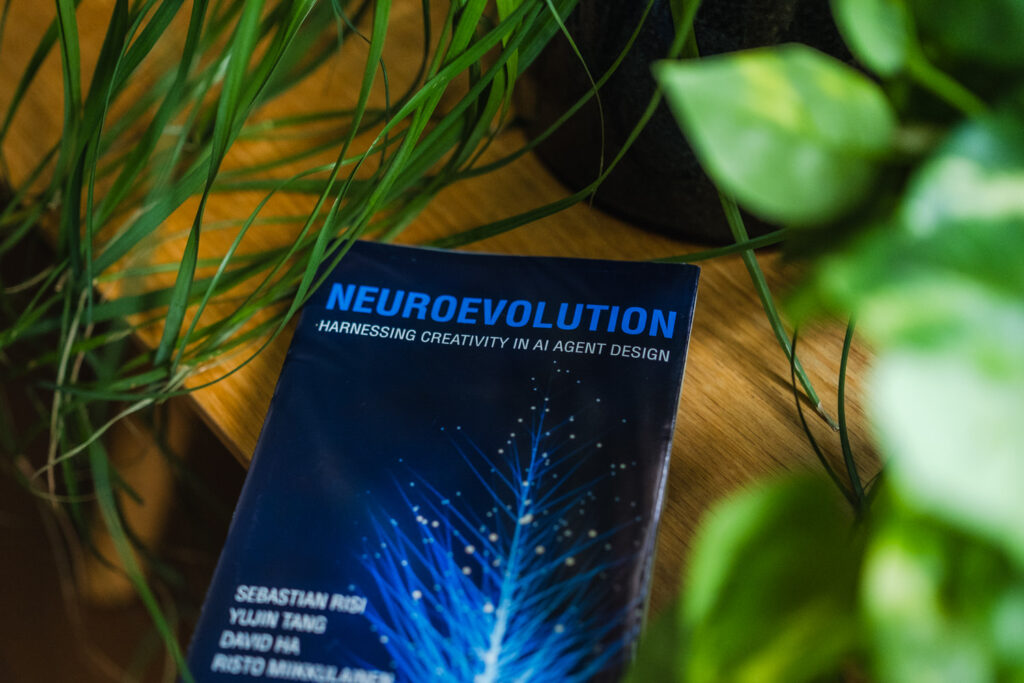
“Together with Sebastian Risi, Yujin Tang, and David Ha, we wrote the book Neuroevolution: Harnessing Creativity in AI Agent Design. It is a good place to start for anyone interested in learning more about these ideas.”