Combining engineering and medicine took Jukka Kortelainen from academia to the helm of a health technology company. Along the way, he realised that research creates impact not only through new discoveries, but through getting those discoveries into use. Today, technology built on his research helps clinicians identify disturbances in the brain activity of intensive care patients faster than ever before.
A company born from the needs of intensive care
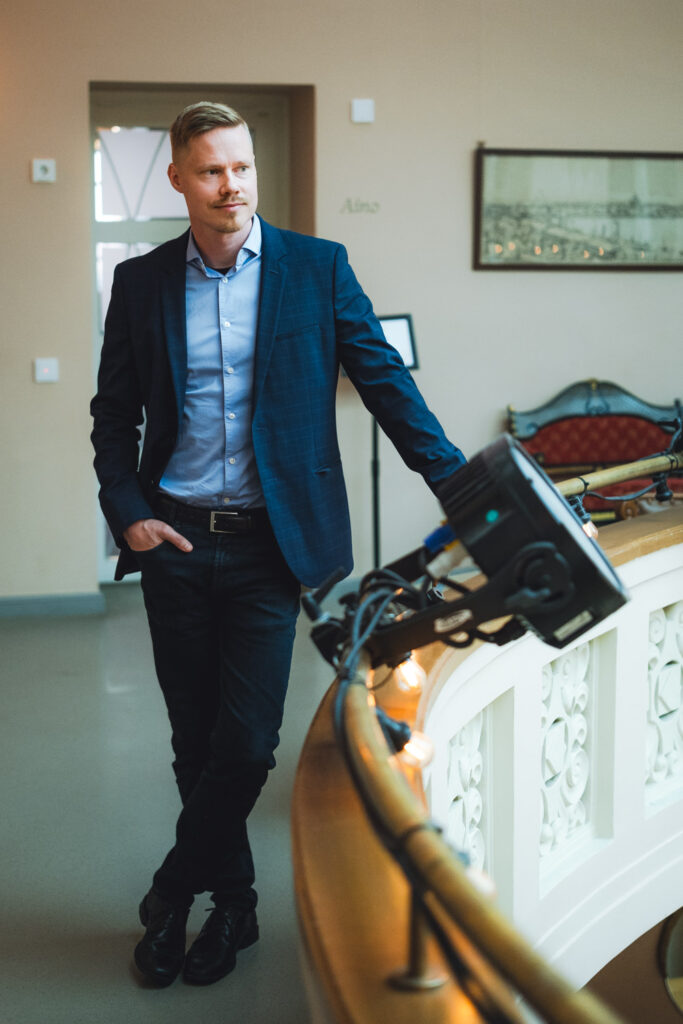
The day-to-day life of CEO Jukka Kortelainen looks very different from when he first began his research career. Nearly a decade has passed since he took the lead at health technology company Cerenion. While responsibility for employees and funding can occasionally feel heavy, he is grateful for the path his career has taken.
“I’m in my dream job. Research provided a strong foundation for entrepreneurship, and I genuinely enjoy the work of a CEO.”
According to Kortelainen, the responsibilities of a researcher and a chief executive are not entirely different. Both involve carrying significant responsibility, although the pace of decision-making is markedly faster in a growing company.
Fortunately, that is something he has learned over the years.
Commercialisation as a source of motivation
Cerenion’s goal is to help clinicians detect abnormalities in the brain activity of intensive care patients as quickly as possible, sometimes within minutes. The company’s medical device, based on Kortelainen’s research, analyses electroencephalogram (EEG) data and supports faster clinical decision-making.
“What excites me is seeing research translated into practice. Commercialisation has only strengthened that motivation. Building a company has been the ideal way to bring together engineering and medicine.”
Both fields have interested Kortelainen for much of his career. After completing his medical studies, he worked in clinical settings, gaining first-hand experience of the hospital environment. That perspective has also helped him understand the needs of healthcare professionals and patients alike.
Speed, reliability and usability are essential.
Having followed the health technology sector and the stories of growth companies for years, Kortelainen knows that innovations come and go. The most successful ones are those that genuinely improve people’s lives. Advances in measurement technologies continue to transform healthcare, enabling critically ill patients to be diagnosed and treated more effectively.
Artificial intelligence is accelerating that development.
“The AI transformation in medicine is significant. We are at a moment when methods that have been used for decades are suddenly taking major leaps forward.”
A grant that made room for research
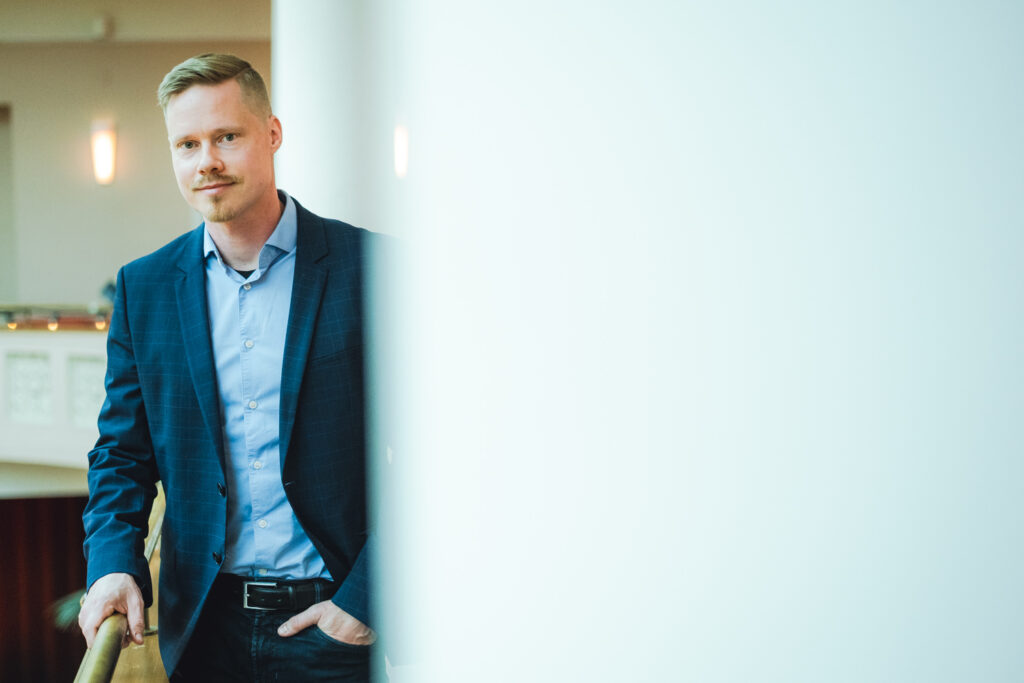
Jukka Kortelainen received a grant from the KAUTE Foundation in 2007. More than financial support, it gave him the opportunity to focus fully on research.
“The KAUTE grant allowed me to dedicate myself to research instead of trying to fit it around other work.”
He remembers his years as a researcher warmly. The financial rewards may have been modest, but the experience was rich in other ways. The GETA Graduate School in Electronics, Telecommunications and Automation, for example, opened doors to professional networks that remain valuable to this day.
Support from the research community was ever-present.
“Every year there was a cruise that brought together all doctoral researchers. Everyone presented their work and had the opportunity to exchange ideas with colleagues.”
From researchers to founders
Although Kortelainen did not have the support of a formal research group during those years, he found three trusted collaborators along the way. Together, the four researchers founded Cerenion and stepped into an entirely new world of challenges.
The core team has shared a long journey.
“At the beginning, we were researchers first and foremost. None of us had experience in building a company. Over the years, we have strengthened the team with people who brought commercial and business expertise that we lacked.”
Kortelainen remains involved in research today, even though much of the responsibility has shifted to his partners. Maintaining a connection to research, he says, is important. It also provides valuable perspective for his work as a CEO.
Beyond the laboratory
For anyone considering a research career, Kortelainen has a straightforward piece of advice: explore the possibilities of commercialisation from the very beginning.
“Researchers are often deeply immersed in their own field of study. If you want your findings to make a difference in the real world, it is important to look at them from a broader perspective as well.”
For him, commercialisation is simply a way of turning ideas into impact.
“It doesn’t mean selling your soul. Taking research out of the laboratory and into practice is often what makes it possible for an idea to genuinely help people.”
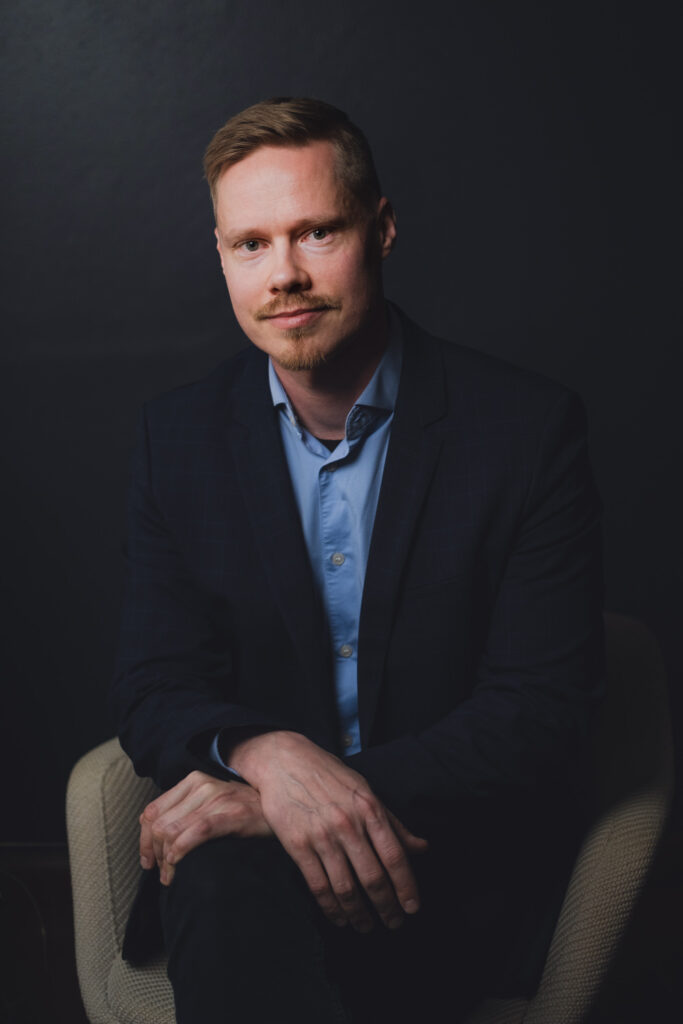
What or who has broadened your horizons?
“Bringing a commercial perspective into my research. Applying for Research to Business funding (Business Finland) helped me see entirely new possibilities. Academic funding is always limited, and many people are competing for the same resources.”
If money were no obstacle, what ambitious dream would you like to achieve in your work?
“Seeing our invention succeed internationally would be incredibly rewarding. I would also like to help other entrepreneurs. Perhaps that will be possible one day if my role at Cerenion changes.”
How can readers learn more about your field?
“You can find plenty of information on Cerenion’s website. I would also recommend the Startup Handbook by Timo Ahopelto and Jyri Engeström. It is an excellent read for researchers as well.”